
An AI project by Tony Rosen.
A Blood Test Is Learning to Tell Time
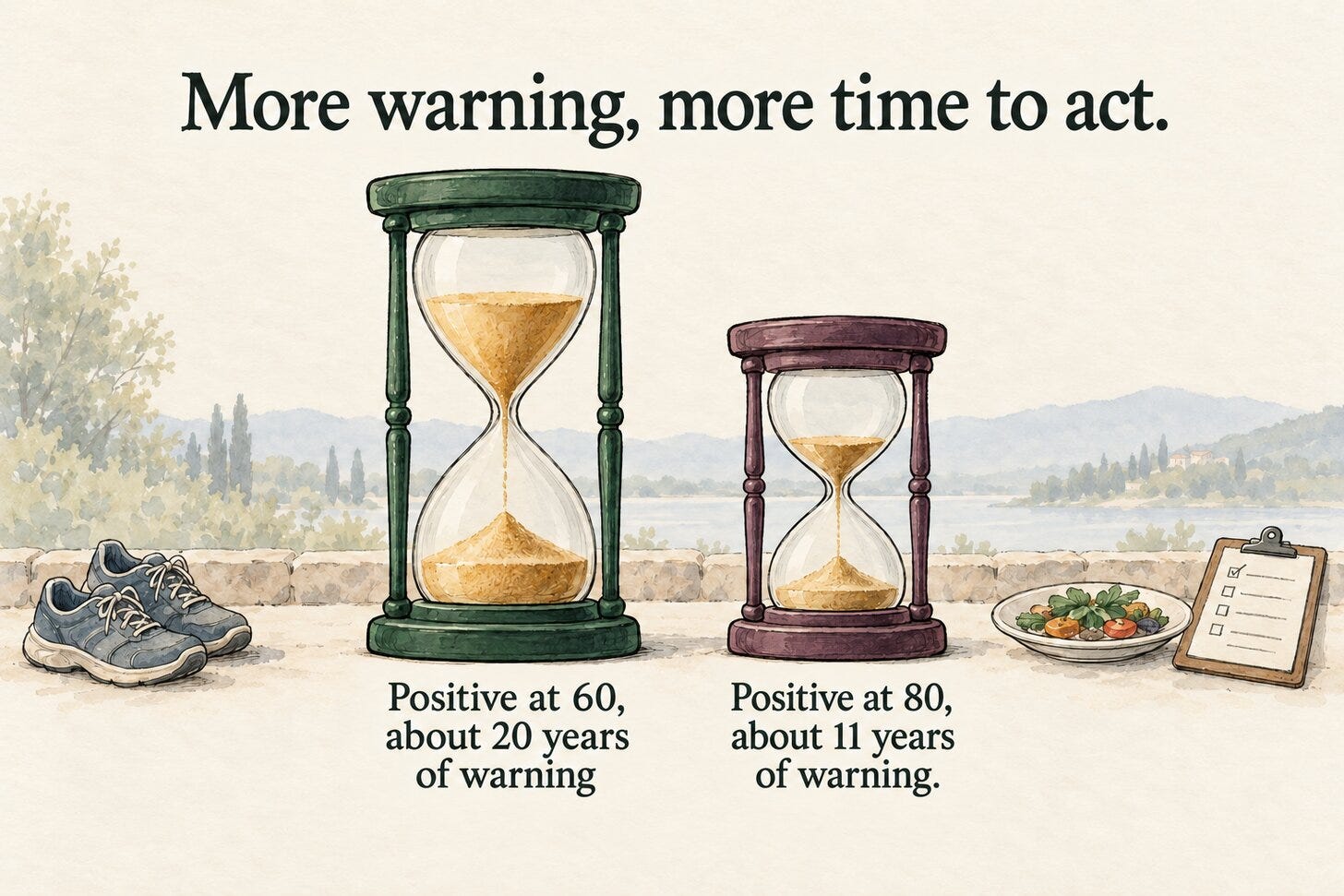
In research volunteers followed for years, a single blood test estimated when Alzheimer’s symptoms would begin, and its estimates were typically off by about 3 to 4 years.
Blood tests can already show Alzheimer’s changes in someone with memory problems. Suzanne Schindler’s team at WashU Medicine asked the next question: how long before those changes reach everyday life? Their answer is a “clock,” a model that turns one blood measurement into an estimated time until symptoms. It reads p-tau217, a form of the tau protein whose level in blood reflects Alzheimer’s changes in the brain. Earlier ways of making that estimate needed brain scans. This one needs a blood draw.
Age set the pace. In one model, people whose p-tau217 crossed the test’s threshold at 60 developed symptoms about 20 years later; those who crossed it at 80, about 11 years later. Those are group estimates, with room for individual lives to differ.
The earlier the warning, the more time there is for prevention. Many of the risks linked to dementia, like high blood pressure and inactivity, are ones people can work on from middle age. If the clock holds up for individuals, years of warning would be years to plan, to join a prevention trial, and to change habits. In the US POINTER trial of 2,111 older adults at risk of memory decline, a structured two-year program of exercise, diet, brain training and social activity improved thinking scores more than a self-guided one. Whether those changes delay symptoms in someone whose blood test is positive hasn’t been tested.
The first use is in research. A prevention trial could enroll people close to symptoms, rather than wait years for enough volunteers to become ill. A personal forecast needs better precision and testing in a broader range of people. If the clock holds up, it could answer the question families most want answered about a prevention drug, and sooner: does it actually buy more time?
Gist: A blood-based clock estimates the timing of Alzheimer’s symptoms.
Evidence: Two groups of research volunteers, 258 and 345 people. No treatment was tested.
Origin: Suzanne Schindler and Kellen Petersen, WashU Medicine and collaborators. Nature Medicine, 2026.
How would someone get one of these blood tests? Through a doctor, if they have memory or thinking problems. The Food and Drug Administration cleared the first Alzheimer’s blood test, Fujirebio’s Lumipulse, in May 2025 for adults 55 and older with symptoms seen in specialist care. Roche’s Elecsys pTau181 followed in October 2025 for family doctors, to help rule Alzheimer’s changes out.
Can someone without symptoms get tested anyway? A few labs sell Alzheimer’s blood tests online, without a regular doctor’s visit. WashU says these tests aren’t recommended for people without symptoms outside research, and no test yet gives a personal date. A result, either way, is worth taking to a doctor.
What’s worth watching for next? Prevention trials that use the clock to choose volunteers. A version precise enough for one person, which the study’s lead author thinks further refinement could bring. And the Alzheimer’s Association’s first guideline on prevention, planned for 2027.
Want to dig in? The paper gives the models and their limits. WashU’s account explains their intended use.
The Roundup

The oldest, sharpest brains may still be growing new nerve cells. In donated brains, a University of Illinois Chicago team found more young nerve cells in SuperAgers, people over 80 whose memory is as good as that of people decades younger. The cells sat in the hippocampus, a region needed for forming memories. Only 6 SuperAgers were studied, so their roughly double count against typical older adults could still be chance.
Medical records hold clues years before a memory diagnosis. In two large sets of health records, Vanderbilt researchers found more than 70 conditions that were more common in the decade before an Alzheimer’s diagnosis, including depression, sleep problems, and high blood pressure. The pattern could help improve forecasts.
A recall shows why one blood test is never the whole picture. The Food and Drug Administration (FDA) posted a recall on February 5, 2026, for four batches of cartridges used in Fujirebio’s Lumipulse blood test, which looks for signs of the amyloid buildup seen in Alzheimer’s. Some gave falsely high results, and labs were told to review earlier results where needed. The Alzheimer’s Association’s guideline already says a positive result from some blood tests should be confirmed with a brain scan or spinal fluid test, after a full check-up with a doctor.
Spotted in the Wild
Methylene blue, the blue dye sold online as a “brain booster.” It’s a prescription drug, injected to treat a rare blood disorder. Its label carries the FDA’s strongest warning: combined with some antidepressants or opioids, it can cause serotonin syndrome, a reaction that can be fatal. No trial has shown that the drops and capsules sold online help memory. Read the full review.
Lion’s mane is everywhere, and the evidence is thin. The mushroom supplement’s best human study is a small 2020 trial of one specially prepared extract in 49 people with mild Alzheimer’s, 41 of whom finished. The extract beat a placebo on one measure of daily living, and four people dropped out with stomach upset or a rash. Six of the ten authors worked at the supplier’s research institute. The powders, gummies and capsules on sale are made in many different ways, and none was tested in that trial. Sleep, exercise and blood pressure have far more evidence behind them. Read the full review.
Worth Watching
Watch: Brooks’s American Idol audition
A caregiver for people with dementia steps up to sing. The audition dates to January 26, 2026.
Trial Watch
A treatment start that can happen at home. Leqembi treats early Alzheimer’s by clearing amyloid, a sticky protein, from the brain. Back in February, the FDA was still deciding whether people could begin it with an injection under the skin instead of an IV drip. It said yes on July 13, and the autoinjector became available in the US on August 24. The brain scans and the checks for swelling and bleeding still come with it.
Three more we’ve been following since the September 29 edition:
Auvelity, for severe restlessness and distress in Alzheimer’s. The FDA approved it for this use April 30. It was already sold for depression.
AR1001, a pill being tested for early Alzheimer’s. This is the one to circle. The approved Alzheimer’s drugs that slow the disease are infusions or injections; this would be a pill, from the same drug family as Viagra, and its trial is big, with 1,535 people. Its first results are on the conference program for November 16.
HOPE, a test of a light-and-sound headset. Cognito’s Spectris device is worn at home for an hour a day and plays light and sound that flicker 40 times a second, a rhythm that mouse studies at MIT linked to less amyloid buildup. If it works, it would be a drug-free treatment, and this is the large trial that will tell. All 673 people are enrolled, says Cognito’s study page. No word yet on when results land.
The full Trial Watch feature is coming soon.
Caregiver Reset
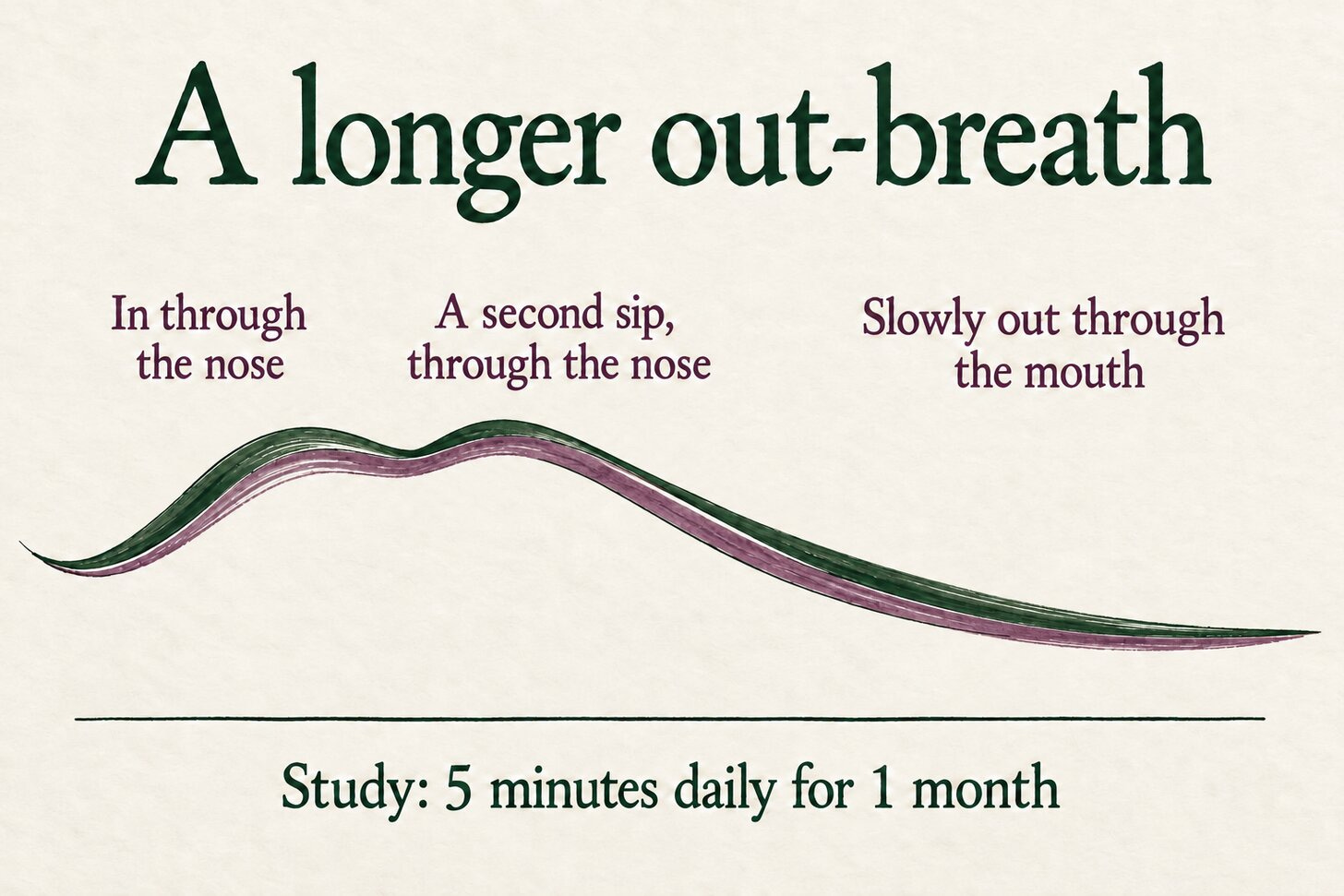
This one is for the person doing the caring. One breathing pattern studied at Stanford is called cyclic sighing: breathe in through the nose, take a second small sip of air through the nose, then let it out slowly through the mouth. The out-breath is longer than the in-breath.
In a randomized study, five minutes a day for a month improved mood and reduced breathing rate more than the same time spent in mindfulness meditation. It studied generally healthy adults rather than caregivers, and it tested five minutes a day.
Want to dig deeper? The papers and readable accounts behind this edition are gathered on the alzamateurs.com edition page.
Written by AI. Directed by Tony Rosen. How this newsletter is made.